Drama Research – Theatre History
This little page is where I’ll keep info about theatre
history. Everything on this page
comes from a power point that Jeremy showed us in class unless, otherwise
stated.
Greek Theatre: 5th
Century BC
My
classics professor once told me that everything good comes from Greece, so it’s
not surprising that Athens is where the western tradition of theatre originated.
Participation was a big part of citizenship and these are some of the things people participated in: festivals, religious rituals, politics, athletics and gymnastics, music, weddings, funerals and Symposia.
The Greek Symposia was basically a place where all the men
got drunk and talked about life (or anything really). Jeremy said that we still have symposia’s today and that we
should bring our English professor some wine and just have a grand time. I’m down with that.
Men would drink three kraters: the first one for health, the
second one for love and pleasure and the third for sleep. The wise men go home after the third
one, but many would stay and seven more kraters followed: the fourth is for bad
behavior, the fifth is for shouting, the sixth is for rudeness and insults, the
seventh is for fights, the eighth is for breaking the furniture, the ninth is for
depression and the tenth is for madness and unconsciousness.
I would be done after the first one.
There are three types of Greek theatre: comedy, tragedy and
the satyr play.
Some famous playwrights are: Aeschylus, Sophocles, and
Euripides.
Roman Theatre: 3rd
Century BC
Theatre was developed and expanded under Roman influence. In 240 BCE, regular Roman drama took
off. In the 2nd
century, drama was firmly established and the collegium poetarum, a writer’s guild, was formed. Jeremy dismissed Roman drama and said
that it was all still the Greeks.
Medieval Theatre:
Middle Ages 13th-16th Century
Medieval Theatre was for a different kind of audience: the
courts of royalty and the aristocracy.
The types of theatre that took place were scripted re-enactments of
Arthurian legends and other romances.
Towards the end of the Medieval period, the theatre became focused around
staged events.
13th
Century Europe
The Roman Catholic Church dominated during this time
period. There were three types of
theatre: mystery plays (based on Old and New Testament stories), Miracle plays
(stories dealing with the lives of saints), and morality plays (taught lessons
using characters that represented virtues or faults). During this time, important theatrical devices came into the
picture: platform stages and wagon stages.
La Commedia
dell’arte: 16th Century
Starting in Italy in the 1560’s, these were performing troupes (gypsies) who improvised
playlets across Europe. It was very actor-centered and
therefore there were very few props and hardly any scenery. Plays came from scenarios called lazzi, which were frameworks that gave
the situations, the complications and the outcome and then the actors would
improvise with that.
This type of theatre used stock characters which can be
divided into three groups: the lovers (the children of the masters), the
Masters (Pantalone, and elderly Venetian merchant; Il Dottore, Pantalone’s
friend or rival, a doctor or lawyer who acts more intelligent than he really
is; and Il Capitano, a braggart), and finally the Servants (Arlecchino or the
Harleguin, who is cunning and ignorant, but a good dancer and acrobat. He usually carried a wooden stick with
a spilt in the middle, so it made a loud thwack when it hit something. Hence, the comedy we know as
slapstick.)
Research
Sophocles, Oedipal Complex and Antigone
Sophocles was one of the three major
playwrights in Greece. He was a
big part of political and military affairs. He had many friends and was, I guess, a social butterfly. He wrote many plays during his life,
but only seven have been recovered.
Two of his characters are very famous: Oedipus Rex and Antigone. Oedipus is where the term and the
Freudian theory, the Oedipal Complex, came from. It is a theory in which every boy wants to both kill his
father and sleep with his mother.
WTF. Seriously. How creepy is that? Antigone is one of the first known
heroines in literature and it is because of this that her victories and
attributes are often looked down upon and viewed as not very important. The Nazi’s actually let people perform
this, thinking it was nothing and didn’t teach or tell anybody anything. In reality was one of the most powerful
texts of the French Renaissance.
Basically, Antigone was the first feminist.
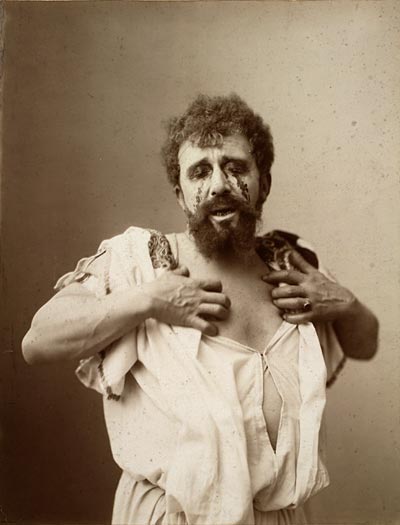
Picture taken from: http://upload.wikimedia.org/wikipedia/commons/6/69/Oedipus.jpg
Info gathered from: http://www.sparknotes.com/drama/oedipus/context.html
Renaissance: 1575-1642 AD
During the Renaissance, there were the
three M’s: Mystery, Morality and Miracle Plays. There were Masques and the Commedia Dell’arte. This era ended with the Puritan
opposition to idolatry and general corruption.
Restoration: 1660-1710
The Restoration began as theatre
returned after an 18-year banishment. There were two types of plays: the Comedy
and the Spectacular. The Comedy
dealt with sexual explicitness, but it was witty and real for the people watching. The Spectacular was able to wow
audiences with the elaborate costumes and set. There were also special effects like trapdoors, fireworks
and things flying in the air.
19th Century Theatre
Early: This
theatre began in France during the French Revolution, 1791. Some of the main plays were Romanticism
and Melodrama and some main playwrights were Victor Hugo and Alexandre Dumas.
Late: The main
authors were Henrik Ibsen, George Bernard Shaw and Oscar Wilde. From these authors I've read "A Doll's House" and "Pygmalion". During these times, plays
were very focused on realism and historic accuracy.
20th Century Theatre
This era is the present. We now deal with extensions of realisms
and naturalism. There were
Modernist and Post Modernist movements.
There are four types of theatre practitioners: Director, Actor,
Dramatist/Dramaturge and the Praxis (how to get to the final product.

No comments:
Post a Comment